It Was Never the Cat. It Was the One Door and the Cold Floor.
Five reasons a stray will sleep beside a tent, a bin and a plastic house and never go in — and why the first shelter built around a second door and a floor that isn't on the ground is the one he finally uses.
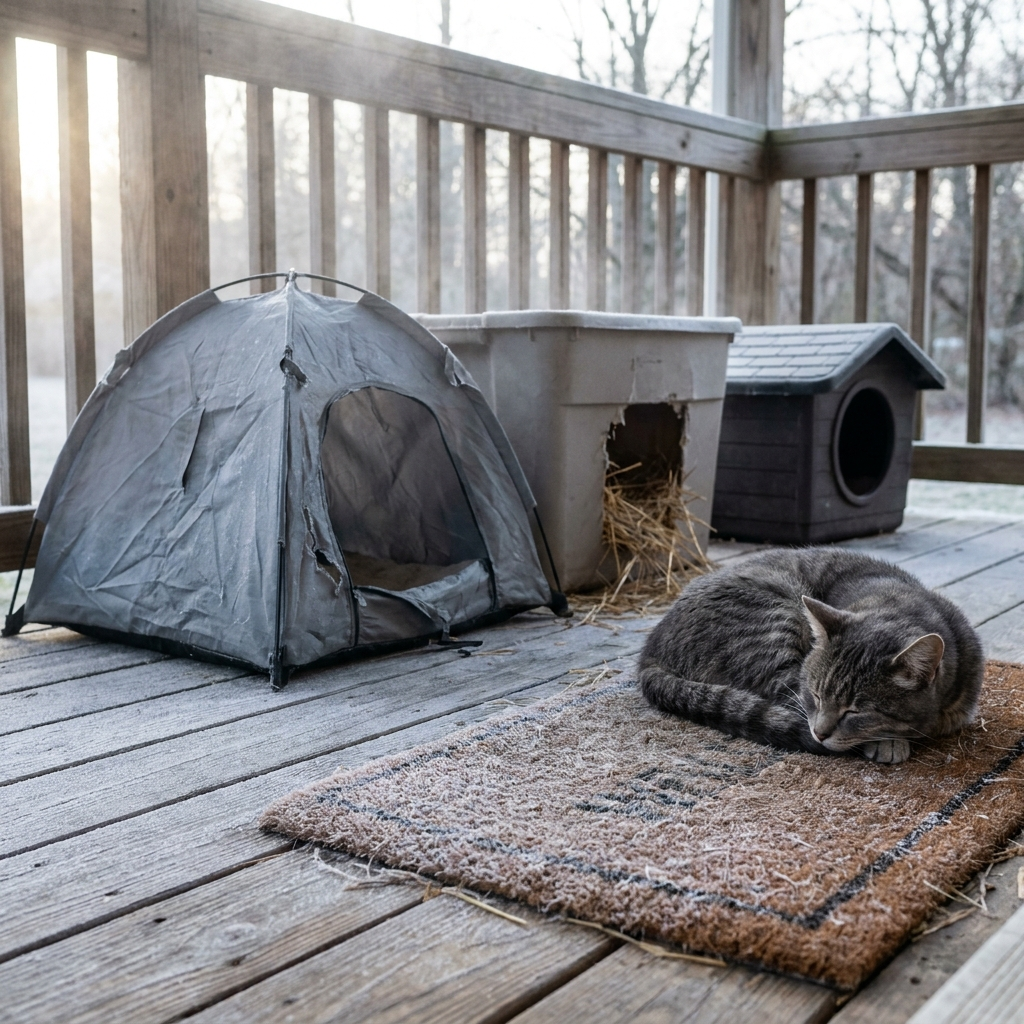
He Slept Next to All Three. That Was Him Telling You Something.
Here's the story you already know. He showed up one fall and decided you were his. He can't come inside — the other cats, or his health, or he just won't cross the threshold. So you bought the nylon tent. He slept beside it. You cut a hole in a storage bin and packed it with straw. He slept beside that. You bought the plastic house with the little heated pad. He slept beside that, on the frozen mat, three feet from a warm bed.
The conclusion you drew is that he's stubborn, or feral, or "just not a house cat." The conclusion is wrong. He wasn't refusing warmth. He was refusing two specific things every one of those shelters had in common, and he has spent his whole life refusing them.
One door. And a floor sitting on the ground. Fix both and the same cat that ignored three shelters walks into the fourth within a couple of nights. The rest of this page is why.
One Door Is a Trap. He Learned That Before He Met You.
A cat who has lived outside knows exactly one rule about small spaces: never go somewhere you can't get out of. A box with one hole is a dead end the moment a raccoon, a dog or the neighbor's tom stands in the opening. He'd rather freeze on the mat with a clear line to the fence than be warm and cornered. That is not stubbornness. That is the reason he's still alive.
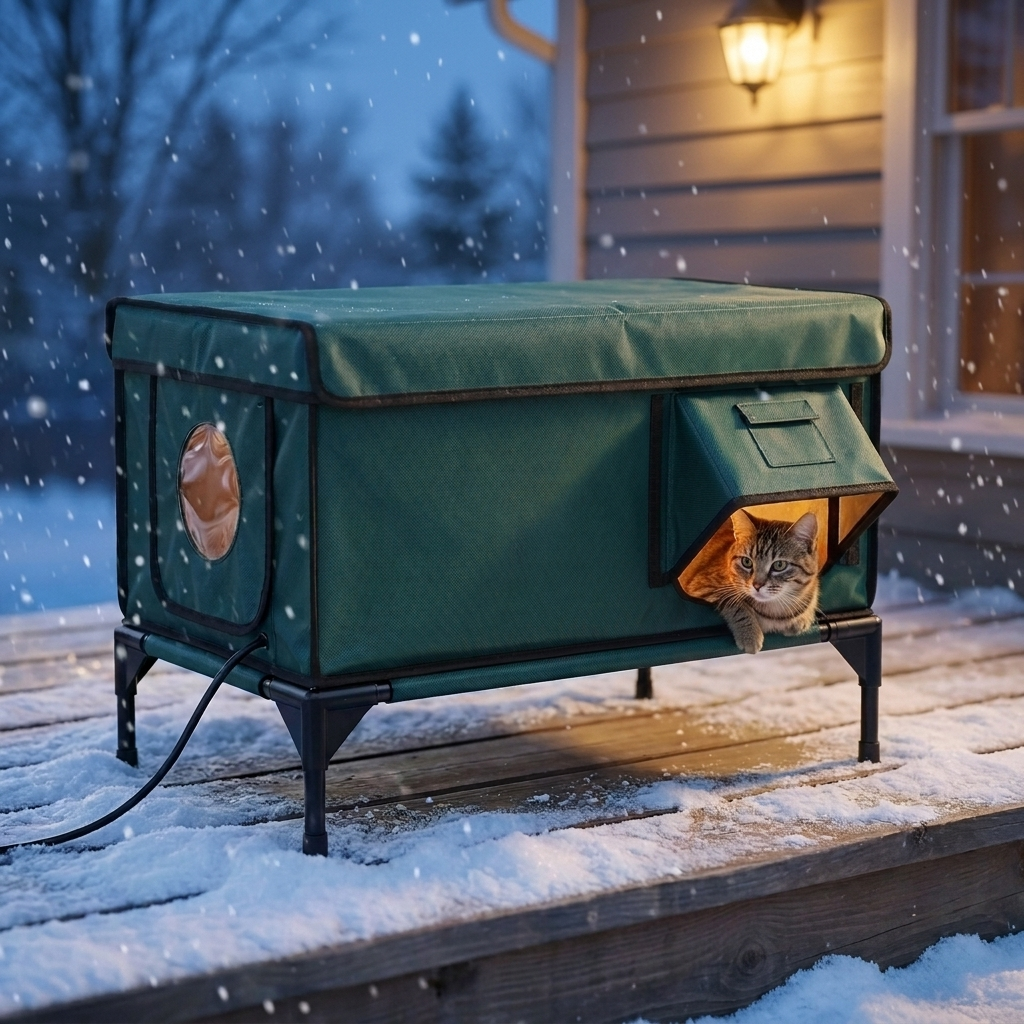
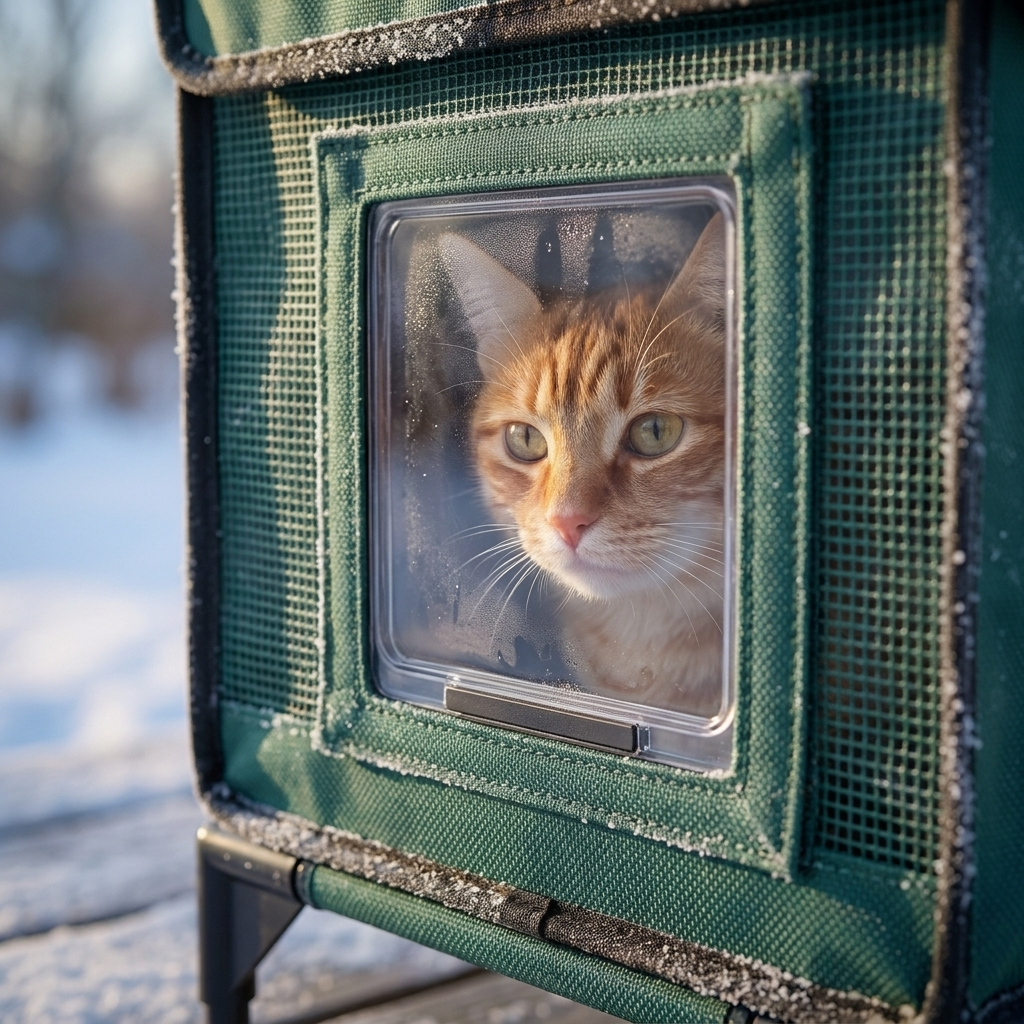
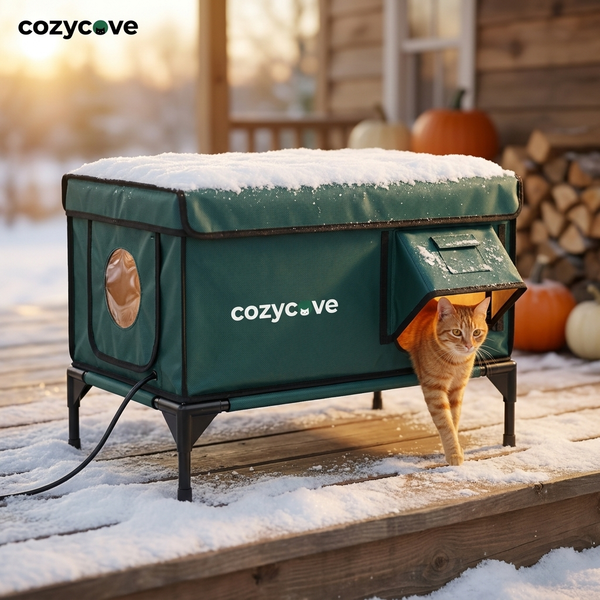
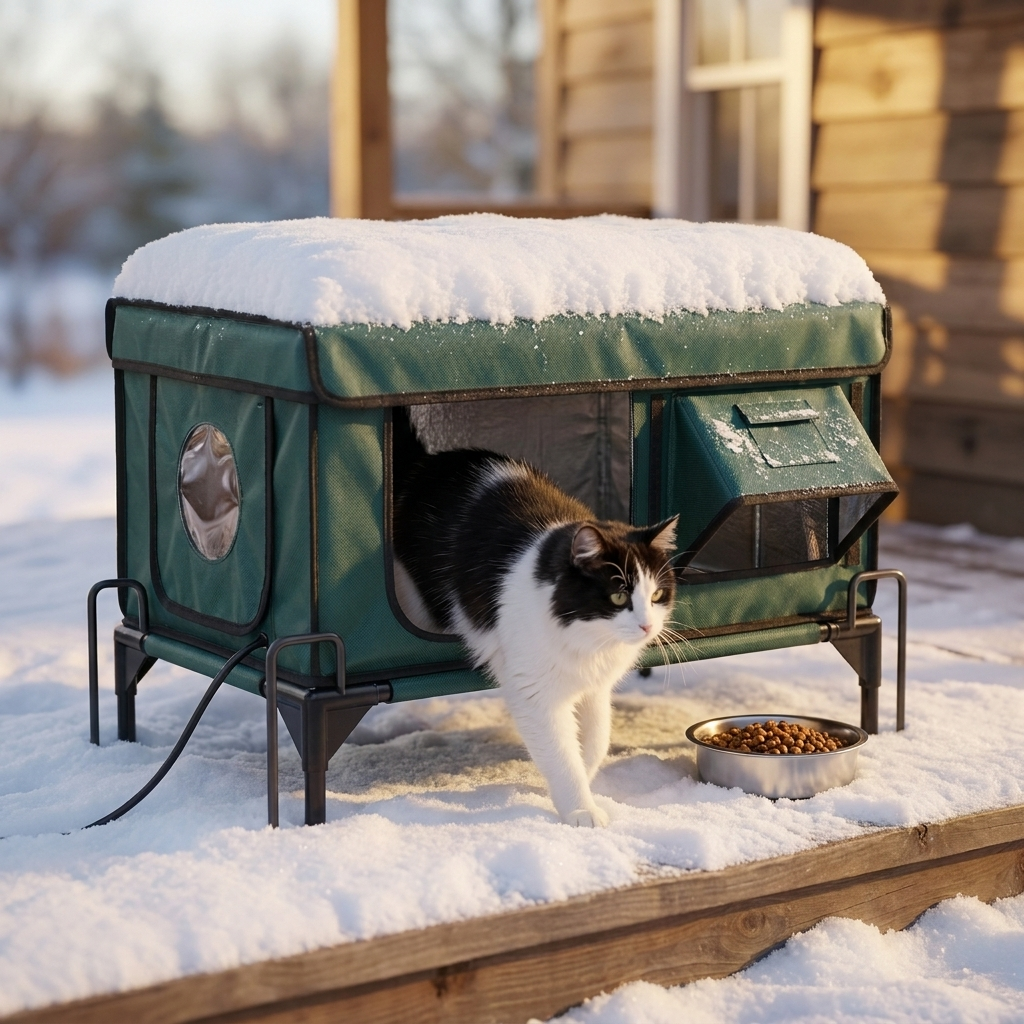
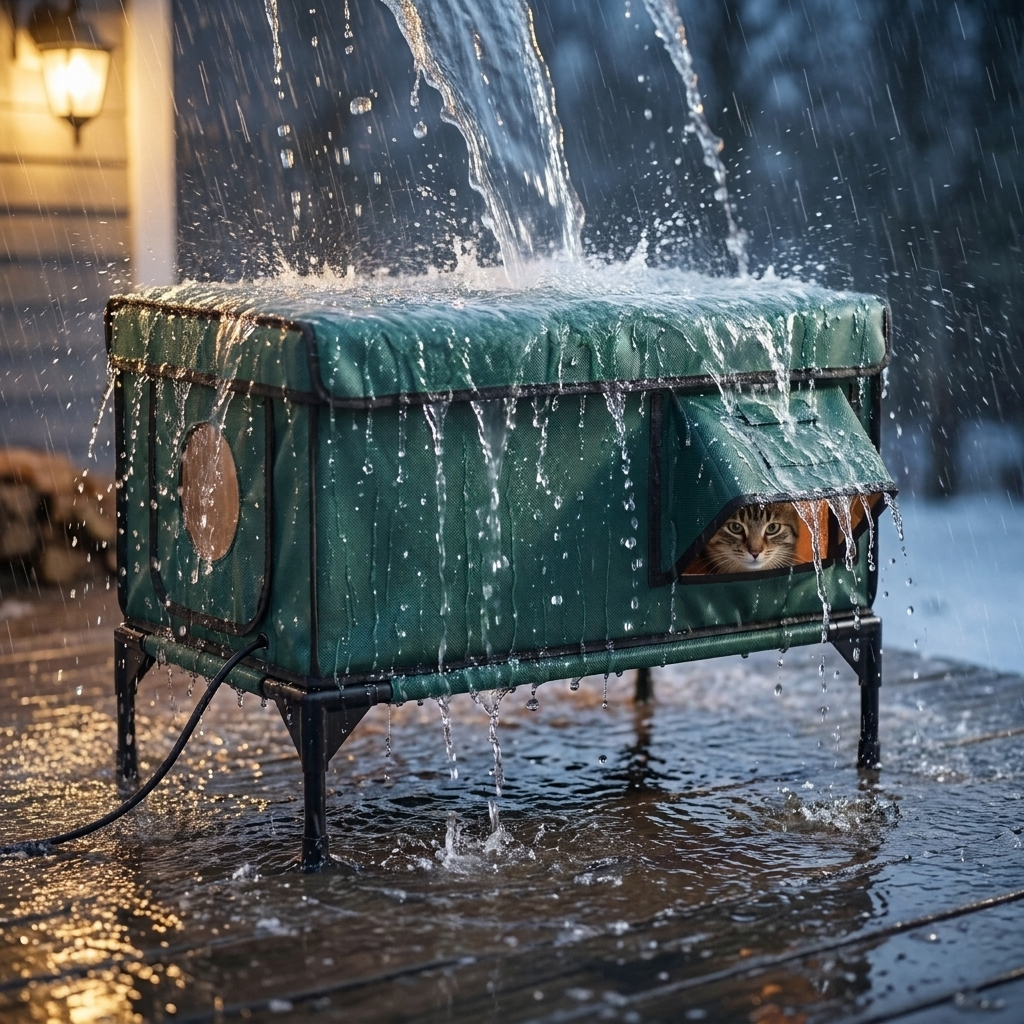
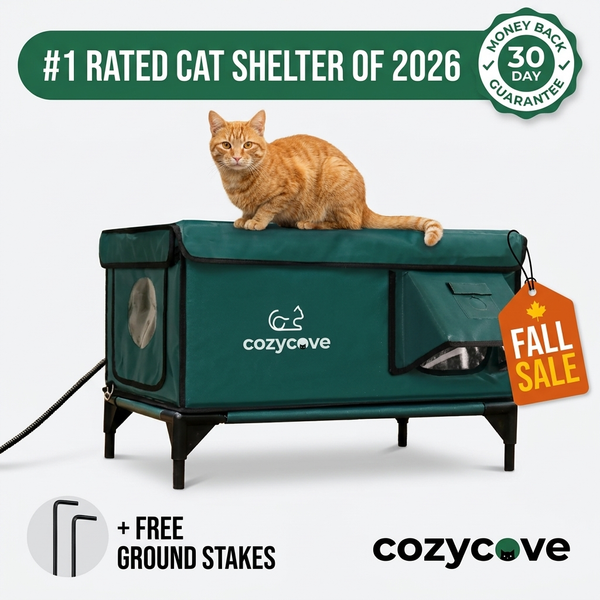
CozyCove has a second door on the side. It only opens outward, on a magnetic latch, and it has a clear window. He can see what's coming and bolt if he needs to. Nothing can push its way in through it. The moment he works that out — and he checks, they always check — the house stops being a trap and starts being his.
The front entry has an eave over it and a soft flap. Fold the flap back for the first week so nothing touches him going in. Tuck a little food just inside. Then leave him alone and let him decide.
Anything on the Ground Bleeds Its Heat Into Frozen Dirt.
Here's the second thing all three of your shelters had in common: they sat on the porch boards, or the dirt, or the concrete. Frozen ground pulls heat out of whatever touches it, all night, faster than a small pad can put it back. The bin was cold because the ground was cold. The tent's floor was wet because meltwater ran under it. A cat can feel a cold floor through a fleece pad. He picked the doormat because the doormat wasn't a wet, cold box.
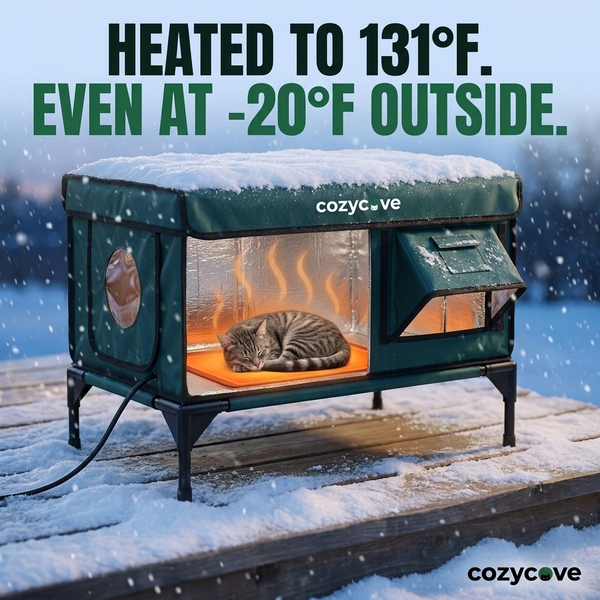
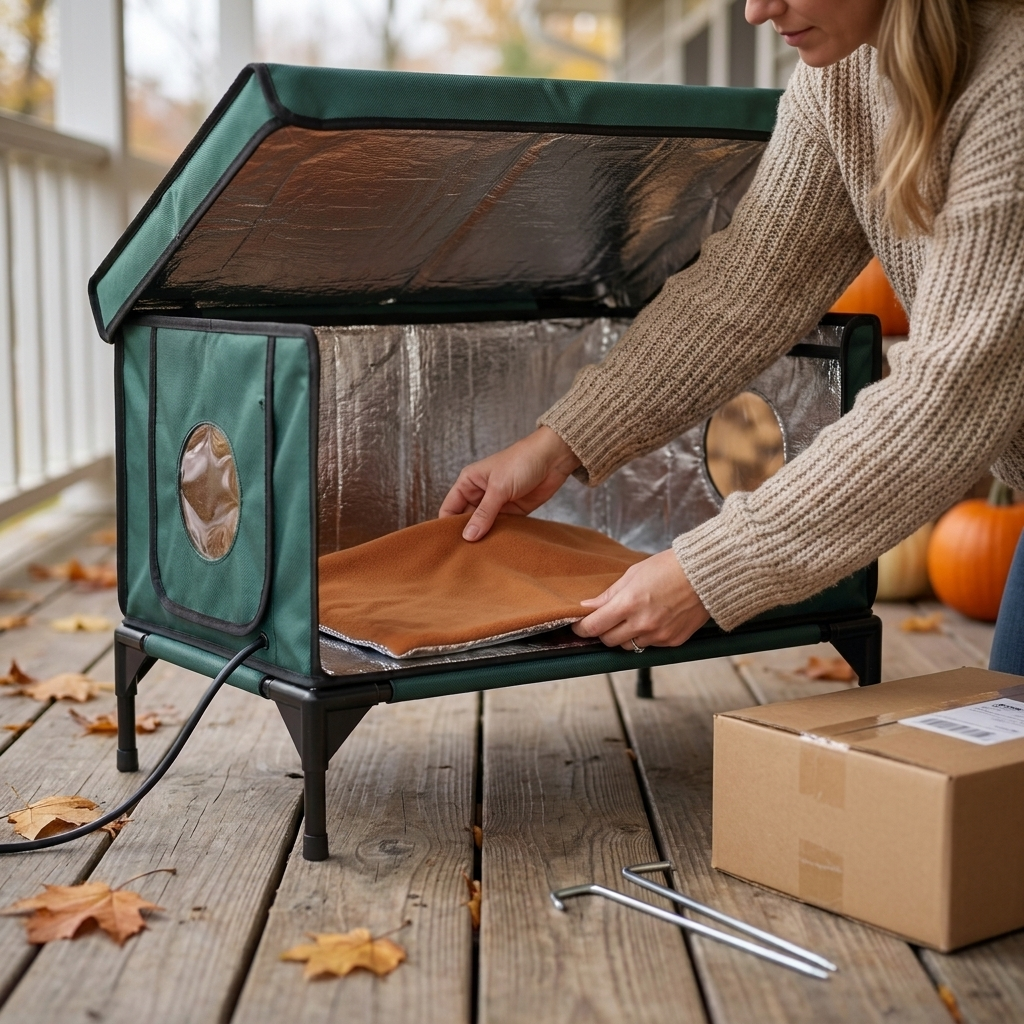
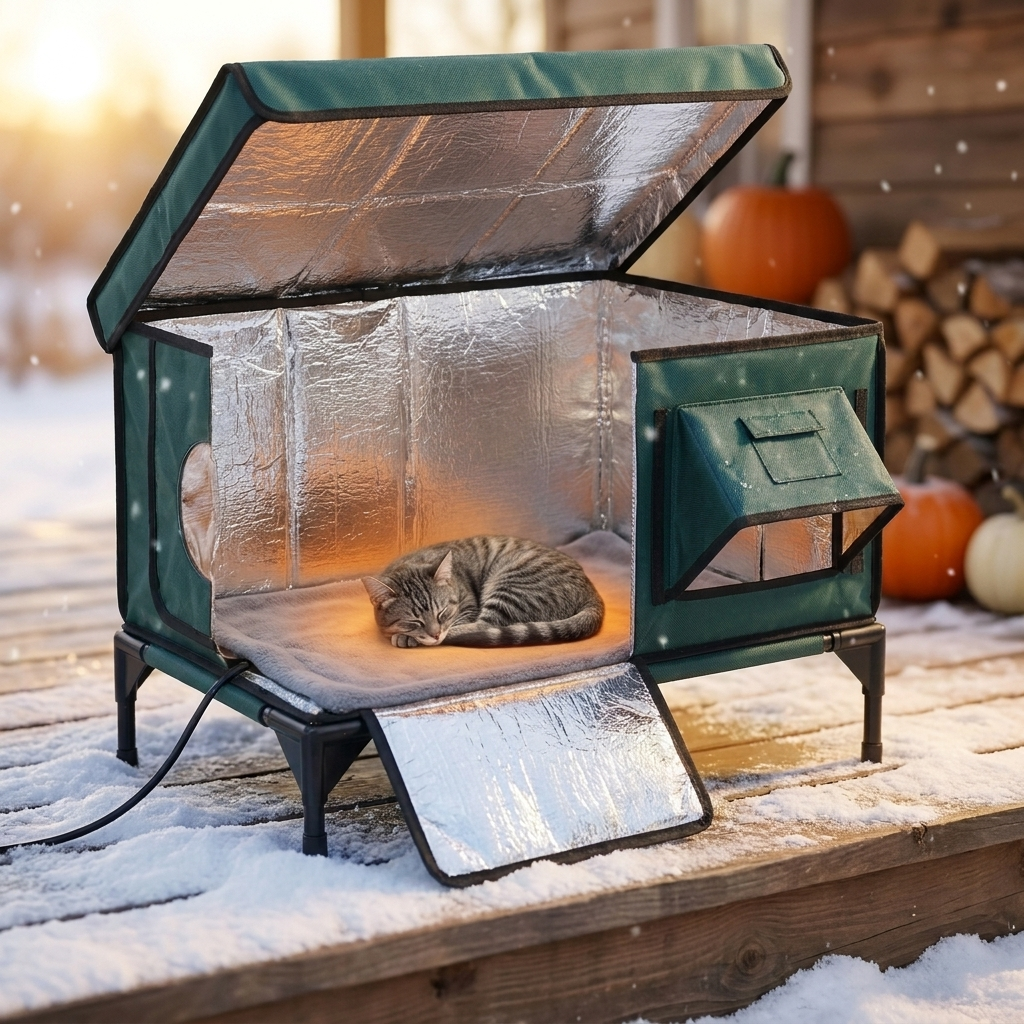
CozyCove sits 6 inches up on a metal leg frame, above the snow, the meltwater and the frozen ground. And instead of one thin layer between him and the cold, every wall, the floor and the roof are lined with reflective foil, so the warmth the pad makes bounces back into the den instead of draining out the bottom.
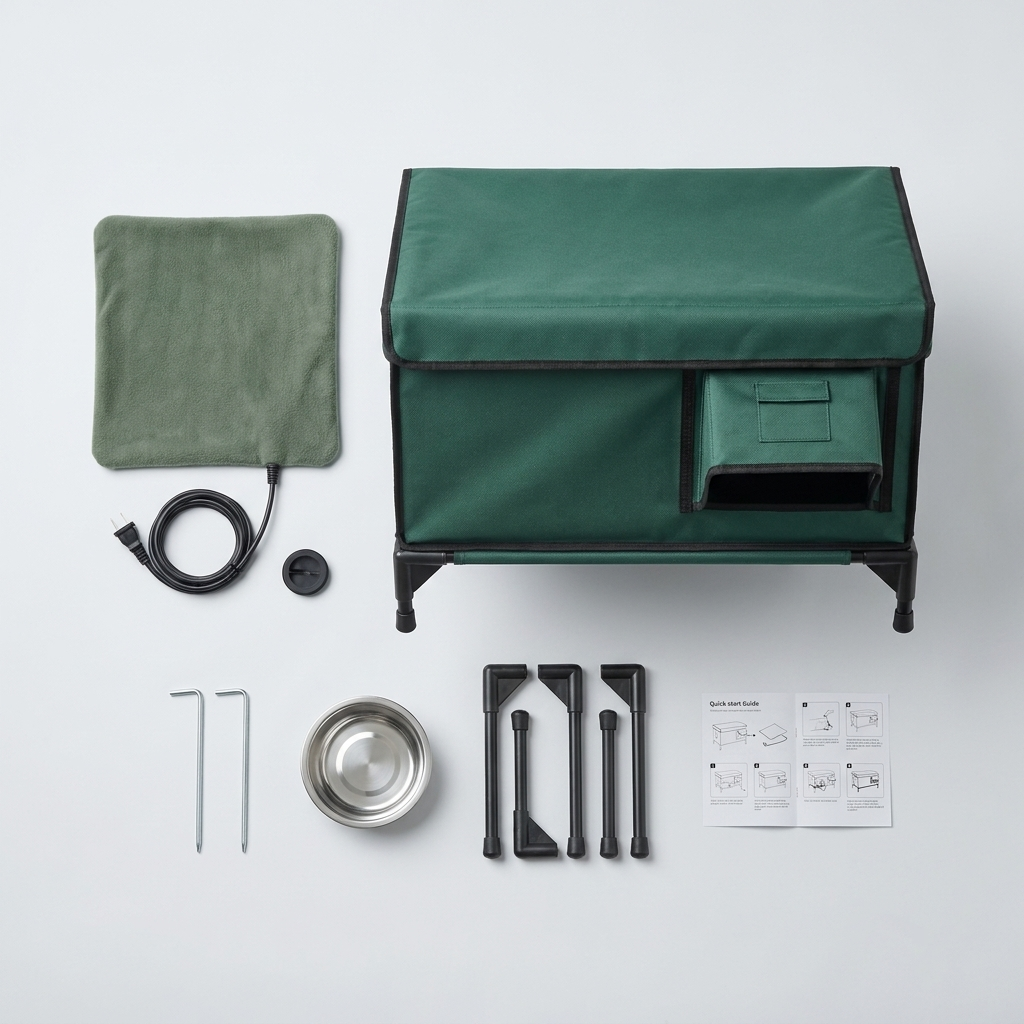
Two ground stakes come in the box. Push them in and the house stays exactly where you put it. No bricks on the roof, no board leaned against the side.
The Pad Stays On All Night. And You Can Stop Worrying About It.
The plastic house you bought probably came with a pad that shut itself off every 24 hours. So on the coldest night of the year, at 3am, it went dark and he was lying on a cold square of fleece in a cold box. That's the night he moved back to the mat.
CozyCove's pad holds a steady 131°F at the surface and never resets. Plug it in October, unplug it in April. It draws 23 watts — about a light bulb — off any outdoor outlet or outdoor-rated extension cord. The cover is fire-retardant fleece and comes off to wash.
The part you were actually worried about: the pad is a listed heating unit, the cord is chew-resistant, and it enters the house through a sealed rubber grommet in the wall — no bare cord, no gap for water where the cord goes in. Lift the lid whenever you want to check on it. That's what the lid is for.
Three Nights. That's the Whole Test.
Here's what the people who feed strays do, and it works on cats that ignored everything else. Put the house where he already sleeps — not where you'd like him to sleep. Door away from the wind. Fold the front flap back. Put a spoonful of wet food just inside the doorway, and nowhere else. Then go inside and stop watching.
Night one he investigates. Night two he goes in for the food and feels the pad. By night three, most of them are in it. You'll know because he stops being on the mat in the morning and you can see him through the escape-door window without lifting the lid.
And the price: $89.95 during the Fall Sale, half off with free shipping. Add up the tent, the bin, the straw, the plastic house and the pad you replaced. You've already spent more than that on shelters he slept next to. This is the one built around the two things he was actually refusing. If he still won't use it in 30 days, send it back for every dollar.
The first heated cat house built around the two things a stray actually refuses: it has a second door only he can open, and it sits 6 inches off the frozen ground with foil on all six sides. Inside is a 131°F pad that stays on all night.
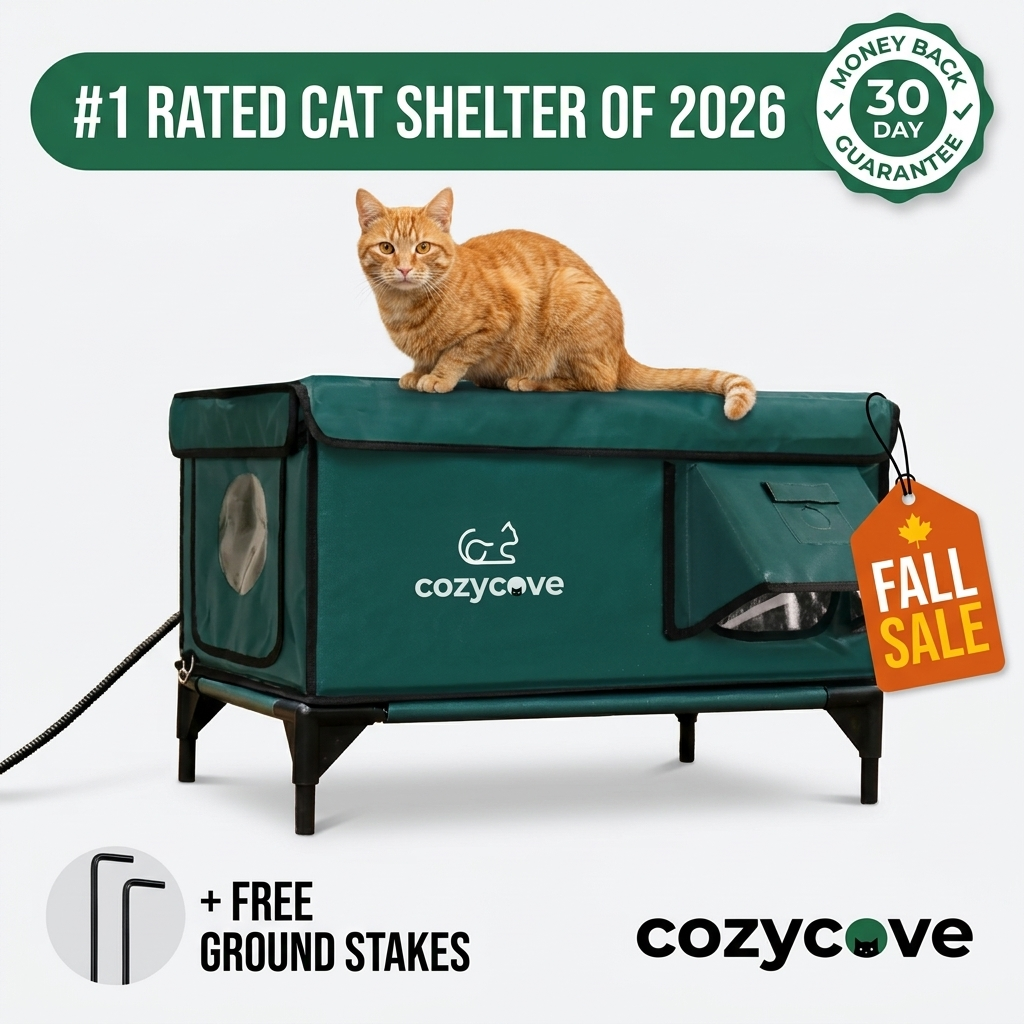
Why 50% off in September? Every house that ships now goes out before the first hard freeze, when everyone orders at once and processing backs up. Early shoppers get the price and get it on the porch before the night that matters. When the cold snap hits, it goes back up — that's the whole story.
$89.95 during the Fall Sale — half off, free shipping, and 30 days to change your mind. A second door only he can open, a floor 6 inches above the frozen ground, foil on all six sides, and a 131°F pad that doesn't switch off at 3am. Put it where he already sleeps and give him three nights.
Get CozyCove — 50% Off →